Vieux Lyon: A Complete Guide to Europe’s Largest Renaissance Quarter
Listed as a UNESCO World Heritage Site, Vieux Lyon is one of the largest Renaissance ensembles in Europe. Nestled at the foot of Fourvière hill on the right bank of the Saône, this timeless neighbourhood is best explored on foot, wandering through cobbled lanes and secret inner courtyards.
What to See
The Traboules
These covered passageways cut through buildings from courtyard to courtyard, once used by the city’s silk workers (canuts) to reach the Saône. Vieux Lyon has more than 40 traboules open to the public. Look for the discreet plaques on carriage doors and push them open: you’ll discover Gothic vaulted ceilings, colonnaded galleries and spiral staircases.
Saint-Jean-Baptiste Cathedral
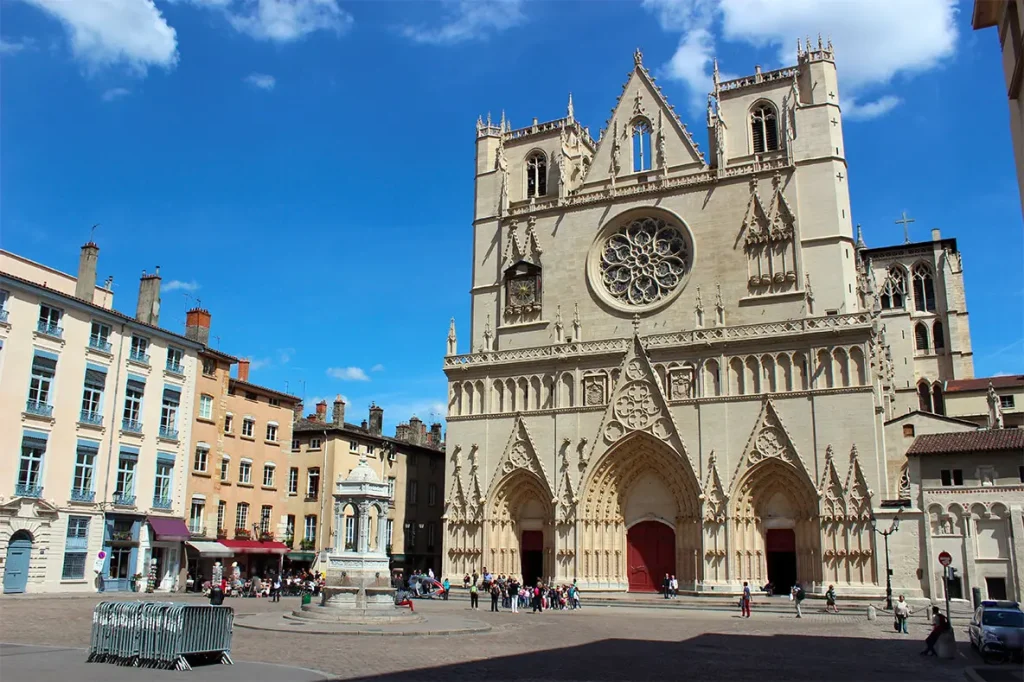
A masterpiece of Lyonnais Gothic architecture, the Saint-Jean Cathedral (12th–15th century) houses a listed rose window and a 14th-century astronomical clock that animates mechanical figures every hour between noon and 4pm. The interior is breathtaking, especially the medieval stained glass in the choir.
Place du Change and Rue Saint-Jean
The historic heart of Vieux Lyon, Place du Change is lined with Renaissance facades featuring finely carved loggias. Rue Saint-Jean, the neighbourhood’s main artery, brings together artisan shops, cafés and 16th-century townhouses in characteristic ochre and rose tones.
Musée Gadagne
Set within a superb 16th-century Renaissance mansion, the Musée Gadagne brings together the Museum of Lyon History and the Museum of Puppet Arts — the birthplace of Guignol, Lyon’s iconic puppet character created in the early 19th century.
Montée du Gourguillon and Fourvière Hill
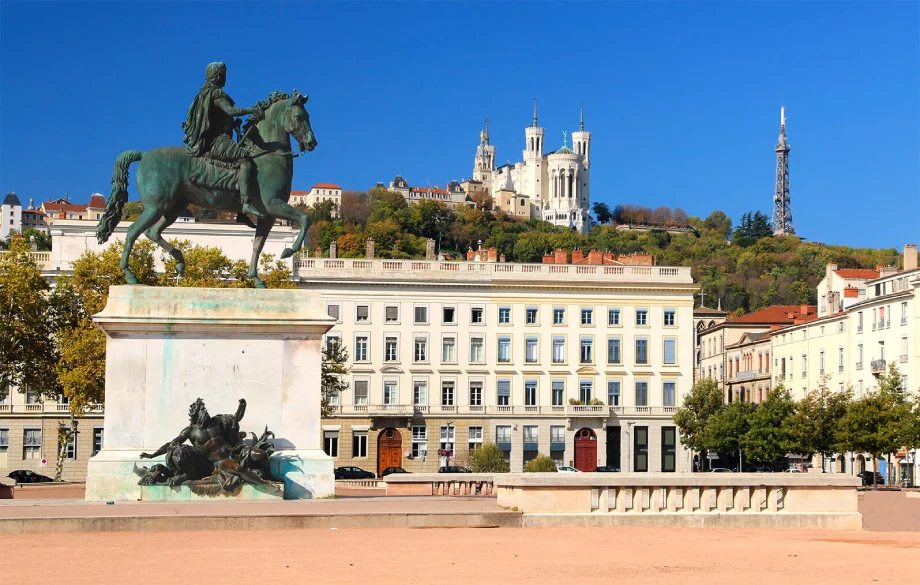
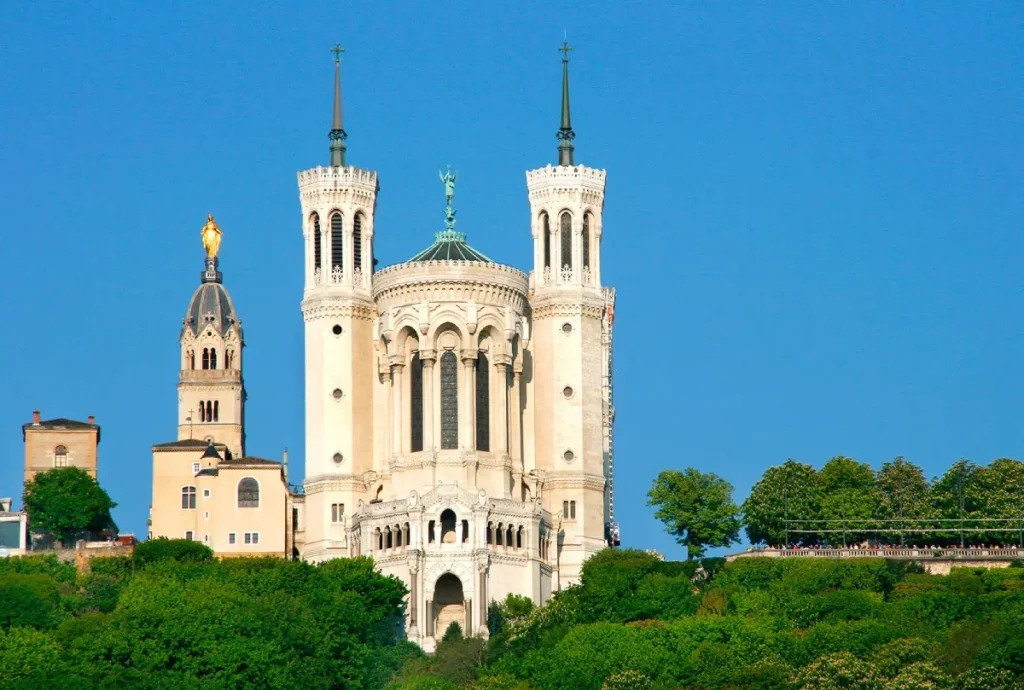
For the adventurous, the Montée du Gourguillon climbs directly from Vieux Lyon to Fourvière. At the top you’ll find a panoramic view over the entire city, the Notre-Dame de Fourvière basilica and the Roman theatres of Lugdunum.
Getting Here from the Hotel
By Metro (Recommended)
The quickest route from the hotel:
- Metro Line A: Perrache → Bellecour (1 stop)
- Metro Line D: Bellecour → Vieux Lyon-Cathédrale Saint-Jean (1 stop)
Allow around 15 minutes in total. Metro Line D drops you directly at Place Saint-Jean, in front of the cathedral.
On Foot
The walk from Cours Charlemagne is pleasant: follow the Saône riverbanks to Pont Bonaparte (about 20–25 minutes). A great opportunity to discover the river quays and their moored barges.
Practical Tips
- Best time to visit: weekday mornings to avoid crowds; the neighbourhood gets lively at weekends
- Recommended duration: allow 2 to 3 hours for a full visit including traboules
- Guided tours: the Lyon Tourist Office runs traboule tours departing from Place du Change
- Traditional restaurants: Vieux Lyon is packed with bouchons lyonnais — ideal for lunch
- Accessibility: some cobbled streets can be difficult for wheelchair users; Rue Saint-Jean and Place du Change are the most accessible